
OEM Terminal Component Supplier Qualification Checklist
A practical OEM checklist for qualifying terminal component suppliers through drawings, materials, finish, samples, inspection, assembly, and RFQ controls.
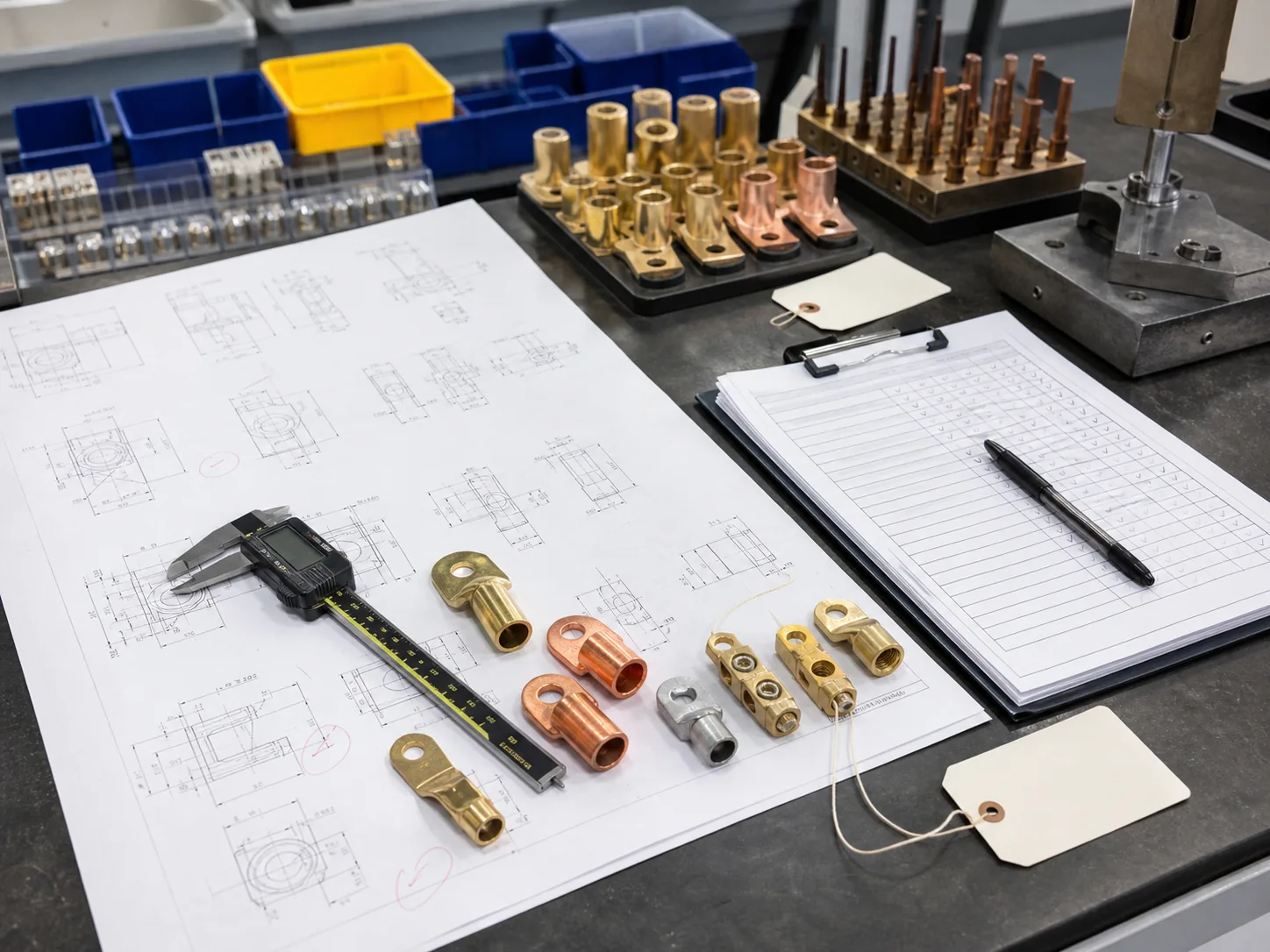
Choosing an OEM terminal component supplier should start with evidence, not a catalog count or a low first quotation. The supplier should be able to connect your drawing, material route, finish, molded insulation, assembly, inspection, and repeat-order controls into one reviewable package.
This checklist is for binding posts, banana jacks, speaker terminals, spade-related hardware, brass or copper terminal parts, and other precision terminal components developed for equipment programs.
1. Confirm the supplier understands the complete component
A terminal is rarely only a machined metal part. Before comparing suppliers, ask which parts of the project they can review together:
- conductive body, pin, collar, nut, or threaded hardware;
- plastic cap, washer, bushing, or other insulation;
- plating or surface-finish zones;
- assembly order and mating interface;
- inspection, packaging, and revision control.
If several processes are outsourced, that is not automatically a problem. The important question is who owns the drawing, sample approval, corrective action, and final release when a defect crosses process boundaries.
2. Start supplier review with a controlled drawing or sample
Send a 2D drawing, 3D model, dimensioned sketch, or reference sample. Identify the dimensions and interfaces that cannot change:
- panel thickness and mounting hole;
- thread, nut, washer, and shoulder geometry;
- banana plug, spade lug, bare-wire, or pin interface;
- rear termination and cable access;
- insulation clearance and color;
- visible finish and contact zones.
A supplier should be able to turn these inputs into a controlled quotation and sample plan. “Same as the photo” is not a sufficient production specification when fit and mating geometry affect the equipment.
3. Verify material and finish boundaries
Ask for the material route for each component, not only a headline such as “brass terminal” or “copper contact.” The review should identify the requested grade, the component it applies to, and the evidence available for that specific part or lot.
For surface treatment, define the finish type, appearance zones, contact zones, protected threads, masking requirements, and inspection method. If a project references an industry standard, record the standard and revision in the drawing or RFQ. Do not treat a generic finish name as proof of thickness, corrosion resistance, adhesion, or electrical performance.
For molded insulation, identify the exact resin grade and supplier when the application depends on material performance. A general PA6 reference does not prove that a particular molded part uses a specific grade or meets a temperature, electrical, or safety rating.
4. Require a sample approval path
The first sample should be checked in the intended assembly, not only on a desk. Depending on the component, review:
- panel installation and mounting access;
- plug, lug, pin, or bare-wire mating;
- thread engagement and cap travel;
- insulation fit and clearance;
- contact and appearance zones;
- assembly sequence and hardware completeness;
- label, color, and packaging requirements.
Record the accepted drawing revision, sample revision, changes, and open items. The approval record becomes the baseline for repeat production.
5. Check the supplier’s inspection logic
Ask how the supplier controls critical characteristics from incoming material through final release:
- Which dimensions are checked and at what stage?
- How are threads and mating interfaces verified?
- How are material lots and finish requirements traced?
- How are molded-part cracks, flash, looseness, or fit issues handled?
- Which inspection records accompany the sample or production release?
- What happens when a batch does not meet the approved criteria?
The answer should connect the inspection plan to the drawing and approved sample. A quality-system certificate can support the supplier review, but it does not replace product-specific acceptance criteria.
6. Compare quotations on the same technical basis
Normalize quotations before comparing price. Confirm that each supplier has priced the same:
- material and finish;
- hardware and insulation;
- tooling or development work;
- sample quantity and approval stage;
- packaging and labeling;
- inspection documents;
- quantity range and shipment assumptions.
Keep MOQ, lead time, capacity, and delivery statements project-specific until the supplier confirms them against the approved drawing, quantity, and production plan.
7. Look for a controlled path from prototype to repeat order
Ask how an approved prototype becomes a repeatable production item. A credible handoff should include the controlled drawing, BOM or component list, approved sample, material and finish requirements, inspection points, packaging instructions, and revision-change process.
The supplier does not need to promise that every project is identical. The supplier does need to explain how changes are identified, reviewed, approved, and communicated before the next release.
8. RFQ package to send
For a faster engineering review, send:
- drawing, model, or reference sample;
- equipment and panel context;
- mating connector or cable details;
- material and finish requirements;
- insulation, color, and assembly notes;
- sample quantity and annual quantity range;
- inspection or compliance requirements;
- packaging, labeling, and private-label needs.
Final qualification decision
Choose the supplier that can make the project reviewable: clear ownership, controlled drawings, part-specific evidence, sample approval, inspection logic, and a repeat-order change path. Do not treat a supplier’s catalog, certification logo, or first price as proof that the terminal component fits your equipment.
For an OEM review, start with custom terminal components, review OEM terminal development, and send the drawing or sample through the RFQ page. For binding-post-specific interface questions, see the 5-way binding post guide and the binding post product page.