
Terminal Component Plating: Contact Zones vs Appearance Zones
How OEM buyers should specify plating and surface finish zones for binding posts, brass terminals, copper contacts, and custom terminal components.
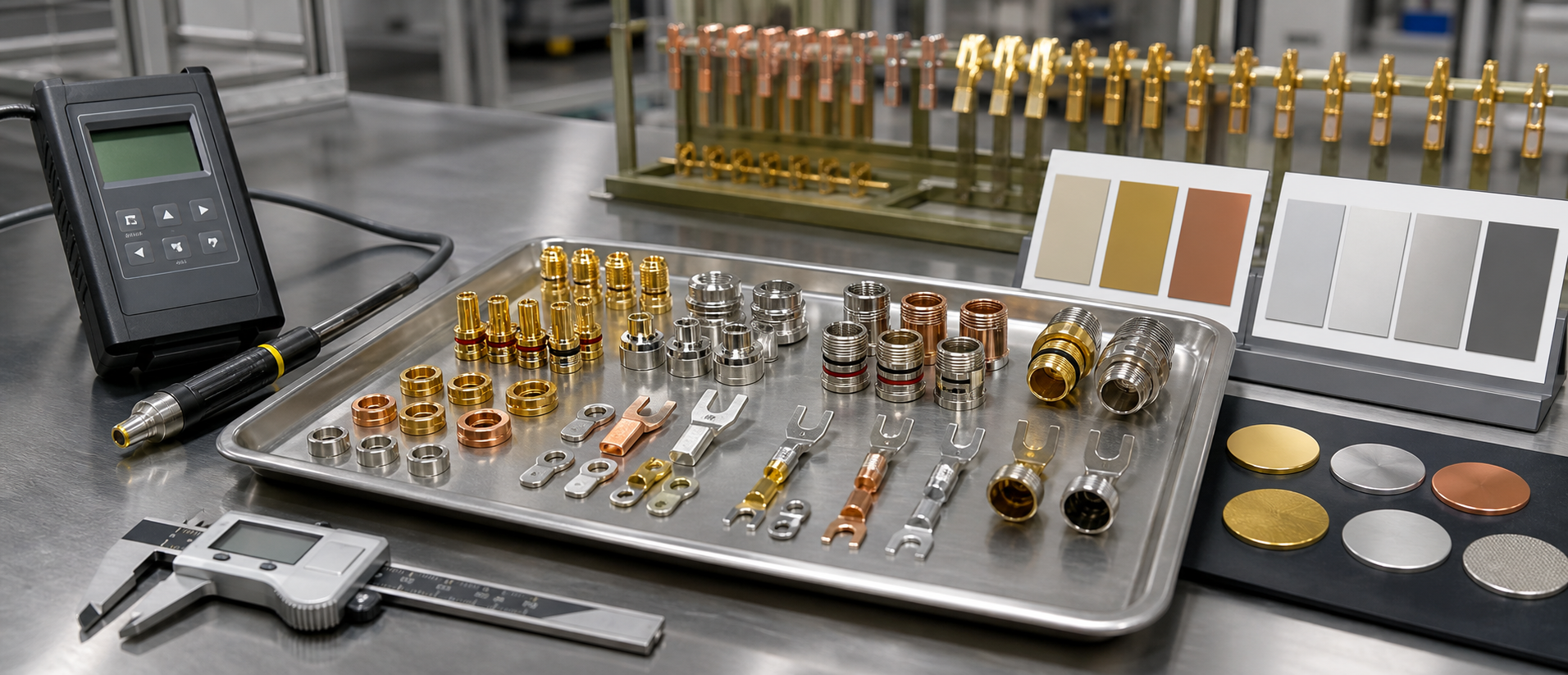
Terminal component plating should not be specified by color name alone. A gold, nickel, tin, or other finish request only becomes useful when the buyer defines which surfaces are contact zones, which surfaces are appearance zones, which threads or mating areas must be protected, and how the approved sample will be judged before repeat production.
Our supplier view is direct: plating is a zone-control decision before it is a cosmetic decision. If the RFQ only says “gold finish” or “nickel plating,” the supplier may understand the color but still miss the contact surface, visible surface, masking area, packaging risk, or inspection basis that matters in the finished terminal assembly.
This guide explains how OEM buyers can prepare a plating and finish RFQ for binding posts, brass terminal parts, copper contacts, spade connectors, banana jacks, and custom terminal components without turning the request into a generic surface-treatment inquiry.
Axiterm’s Supplier Judgment: What We Would Check First
For OEM terminal components, we would not start by asking which plating color looks best. The safer starting point is whether the finish requirement has a controlled function inside the equipment.
Before approving a plating route, check these points first:
- Contact zone before finish name. Identify the exact surface that touches a plug, lug, wire, busbar, socket, nut, washer, or mating component.
- Appearance zone before color approval. Mark the visible surfaces that buyers, installers, or end users will see after assembly.
- Protected threads before sampling. Threads, shoulders, bores, insulation interfaces, and mating areas may need different handling from broad visible surfaces.
- Base material before finish route. Brass and copper parts can have different machining, oxidation, contact, and handling risks before plating.
- Sample approval before repeat orders. The approved sample, finish-zone notes, photos, packaging method, and inspection criteria should stay together as one release record.
Do not decide by finish color, catalog finish name, or a plated sample photo alone. For terminal components, the useful supplier asks where the finish must work, where it must look consistent, where it must not build up, and how the buyer will approve the result.
What Counts as a Finish Zone?
A finish zone is a surface area with a defined job. One terminal component can contain several different finish zones even when the whole part appears to share the same color.
Common zone types include:
| Zone Type | What It Controls | Typical RFQ Question |
|---|---|---|
| Contact zone | Electrical or mechanical contact with mating hardware | Which surface actually touches the plug, lug, wire, busbar, socket, or fastener? |
| Appearance zone | Visible surface after assembly | Which surfaces must match the approved visual sample? |
| Threaded zone | Thread engagement, nut travel, or assembled fit | Does finish buildup affect thread fit or assembly feel? |
| Masked or protected zone | Areas that must be limited, protected, or separately reviewed | Are any surfaces excluded from the main finish requirement? |
| Insulation interface | Fit with molded caps, bushings, washers, or panel insulation | Could finish thickness, burrs, or surface roughness affect assembly fit? |
| Packaging-sensitive zone | Surfaces that can rub, scratch, or discolor in transit | Which plated or visible surfaces need separation or protection? |
The point is not to make the RFQ complicated. The point is to prevent one finish word from hiding several different manufacturing and approval questions.
Why Color Alone Creates Plating Disputes
Color is easy to discuss, but it is a weak specification. Two parts can look similar in a photo and still behave differently in the assembly. Two finishes can share a visible color while using different preparation, contact assumptions, or acceptance rules.
Common causes of plating disputes include:
- The buyer approves the front appearance but not the rear contact surface.
- The finish looks acceptable loose, but scratches after bagging or nut assembly.
- Threads become difficult to assemble because the mating hardware was not reviewed.
- A copper contact part needs oxidation protection, but the RFQ only names the visible finish.
- A brass part needs a consistent appearance, but contact zones and protected areas are mixed into the same requirement.
- The approved sample is not tied to photos, inspection notes, packaging method, or revision control.
A plating RFQ should therefore describe the finish role, not only the finish name.
Brass, Copper, and Mixed Terminal Assemblies
Plating decisions are different when the part is a brass terminal body, a copper contact, or a mixed assembly.
Brass Terminal Parts
Brass terminal parts often combine visible hardware, threads, collars, sleeves, nuts, binding post bodies, and connector shells. The plating review should separate appearance consistency from thread fit, contact surfaces, and assembly handling.
For drawing-based brass parts, review custom brass components and brass machining together with the finish requirement.
Copper Contact Parts
Copper parts usually bring more attention to contact surfaces, oxidation protection, burr control, surface handling, and buyer validation requirements. A finish may be functional, cosmetic, or both, but the RFQ should say which role matters.
For conductive parts, review custom copper components and copper machining before approving the finish route.
Mixed Terminal Assemblies
Many terminal assemblies use several components: brass hardware, copper contact elements, molded insulation, washers, nuts, labels, and packaging. The finish decision should follow the complete assembly, not only the most visible metal part.
If the project includes multiple parts and packaging, connect the finish review to terminal component assembly and OEM terminal development.
Plating RFQ Inputs Buyers Should Send
Send a compact finish package through the RFQ page:
- Drawing, sample, photo set, or marked-up image showing all metal surfaces.
- Base material, or the material assumption if still open.
- Requested finish type, finish color, or approved reference sample.
- Contact zones, appearance zones, protected zones, and masked zones.
- Mating hardware: plug, jack, lug, socket, washer, nut, cable, busbar, panel, or insulation part.
- Assembly sequence: what is plated before assembly and what is assembled after finishing.
- Packaging requirement for plated, visible, or contact-sensitive surfaces.
- Inspection or buyer acceptance requirement if already defined.
- Quantity range, sample quantity, and repeat-order expectation.
- Revision rule for future finish, material, packaging, or supplier changes.
If the project requires exact plating thickness, adhesion test, salt-spray result, electrical rating, voltage rating, safety certification, current-carrying performance, controlled test method, MOQ, or lead time, include it as a buyer requirement for separate review. This article does not claim those values for Axiterm.
How to Mark Plating Zones on a Drawing
A useful plating drawing does not need to describe the chemistry of the finish. It should show what the finish must protect, what it must touch, what it must avoid, and how the buyer will judge the released sample.
For a terminal component drawing or marked photo, separate these notes when they apply:
| Drawing Callout | What to Mark | Why It Matters |
|---|---|---|
| Contact surface | The exact face, edge, bore, washer seat, plug interface, lug interface, or threaded contact area | Prevents the finish request from missing the working surface |
| Appearance surface | The visible area after panel installation, nut assembly, or equipment assembly | Keeps visual approval separate from hidden functional areas |
| Protected or masked area | Threads, bores, shoulders, insulation seats, mating surfaces, or datum-like faces that need separate review | Reduces fit, assembly, or continuity disputes after finishing |
| Post-finish fit check | Threads, mating nuts, panel holes, plug fit, washer stack, or insulation parts to check after finishing | Confirms the finished part still works in the assembly |
| Packaging-sensitive area | Visible or contact-sensitive surfaces that can rub, scratch, discolor, or mix during shipment | Connects finish approval with packing and repeat-order control |
| Release evidence | Approved sample, marked photos, inspection notes, packaging method, and drawing revision | Keeps the repeat order tied to the same acceptance basis |
Avoid vague notes such as “gold finish all over” or “mask critical areas” when the critical areas are not marked. If the buyer is unsure, send the drawing, sample photos, mating hardware, and a short explanation of which surfaces must remain functional after finishing. Axiterm can review the plating requirement as part of the RFQ, but final coating values, tests, and release criteria still depend on project evidence.
Common Finish Risks Before Sample Approval
| Risk | Why It Happens | Prevention Before RFQ |
|---|---|---|
| Contact area is not controlled | Finish was specified by color instead of surface function | Mark the contact zone and mating component |
| Visible finish is inconsistent | Appearance zones were not separated from functional surfaces | Approve photos or samples by visible zone |
| Thread fit changes after finishing | Threaded zones were treated as simple appearance surfaces | Include mating nut, screw, or hardware in review |
| Plated surfaces get scratched | Packaging allows metal-to-metal rubbing | Define packaging protection and separation method |
| Copper surface oxidizes or changes | Surface handling and protection were not planned | Mark copper contact zones and finish role |
| Repeat order looks different | Sample, photo, inspection note, and packaging record were separated | Keep finish release records together |
These are not exotic quality problems. They are ordinary RFQ-definition problems that can usually be reduced before the first sample is approved.
Where This Fits in the Axiterm Site
Use the plating and surface finish review page as the primary owner for finish capability questions. This article supports that page by explaining how buyers should define finish zones before RFQ.
Use related pages based on the project route:
- Binding posts when the finish belongs to panel-mounted speaker, test, or equipment terminals.
- Custom terminal components when the finish belongs to a drawing-based terminal part.
- Custom brass components when the main body is turned or machined brass.
- Custom copper components when the finish protects a conductive copper contact part.
- Spade connectors when cable-side fork geometry and visible contact finish both matter.
- OEM terminal development when material, finish, insulation, assembly, packaging, and sample release must be reviewed together.
The owner relationship matters for SEO and for buyers. This article should not become the product page. It should help the buyer prepare a better finish RFQ and then route the project to the correct product or capability path.
Sample Release Checklist for Plated Terminal Components
Before repeat production, confirm:
- Base material basis. Brass, copper, or mixed material assumptions are recorded.
- Finish-zone basis. Contact, appearance, protected, masked, threaded, and insulation-interface zones are identified.
- Mating basis. Plug, lug, nut, washer, socket, panel, or insulation parts are available for review when they affect finish acceptance.
- Sample basis. Approved sample or photos show the finish, visible surfaces, and any critical contact areas.
- Inspection basis. Appearance, color, adhesion, thickness, contact function, or buyer-specified tests are defined when required.
- Packaging basis. Plated and visible surfaces are protected from rubbing, mixed parts, or label errors.
- Revision basis. Any finish, material, packaging, or supplier change triggers review before repeat orders.
This is the difference between a finish that looks acceptable once and a finish requirement that can survive repeat production.
Frequently Asked Questions
Is gold plating always the best choice for terminal components?
No. A gold-colored or gold-plated finish may be useful in some terminal designs, but the better decision depends on contact function, base material, mating hardware, appearance requirement, environment, sample approval, and buyer validation needs.
Can Axiterm review gold, nickel, tin, or rhodium finish requirements?
Axiterm can review those finish requests when the buyer provides the drawing, base material, contact zones, appearance zones, reference sample, mating parts, and inspection requirement. Exact coating values or compliance results must come from project evidence.
What should be marked on a plating drawing?
Mark contact zones, appearance zones, threaded zones, masked or protected areas, insulation interfaces, and any surfaces that need special packaging protection.
Why does packaging matter for plating?
Plated terminal parts can scratch, rub, discolor, or pick up handling marks during packing and shipment. Packaging should be part of sample approval when visible or contact-sensitive surfaces matter.
When should plating be reviewed with assembly?
Review plating with assembly when the terminal includes nuts, washers, molded insulation, color-coded parts, labels, bags, trays, or mixed metal components. The finish must work after the set is assembled and packed, not only as a loose part.
Source and Review Boundary
This article uses Axiterm’s Plating, Custom Terminal Components, Custom Brass Components, Custom Copper Components, Brass Machining, Copper Machining, Assembly, OEM Terminal Development, Binding Posts, Spade Connectors, and RFQ pages as source material for Axiterm’s review path. The 2026-09-20 SEO Commander action queue identifies plating capability proof as a P1 topic because finish and contact-zone decisions appear across binding post and terminal component topics.
Method and limitation note: final finish type, coating structure, plating thickness, adhesion method, corrosion test, electrical performance, certification, inspection plan, packaging method, MOQ, lead time, and release approval depend on the buyer’s drawing, sample, base material, mating interface, equipment context, and project evidence. No Axiterm plating thickness, test result, certification, electrical rating, exact tolerance, inspection equipment, MOQ, lead time, or customer case is claimed here. Reviewed by Gben, Marketing Manager.