Engineering Evidence
Drawing basis, tolerance needs, mating interface, critical dimensions, contact zones, and validation assumptions.
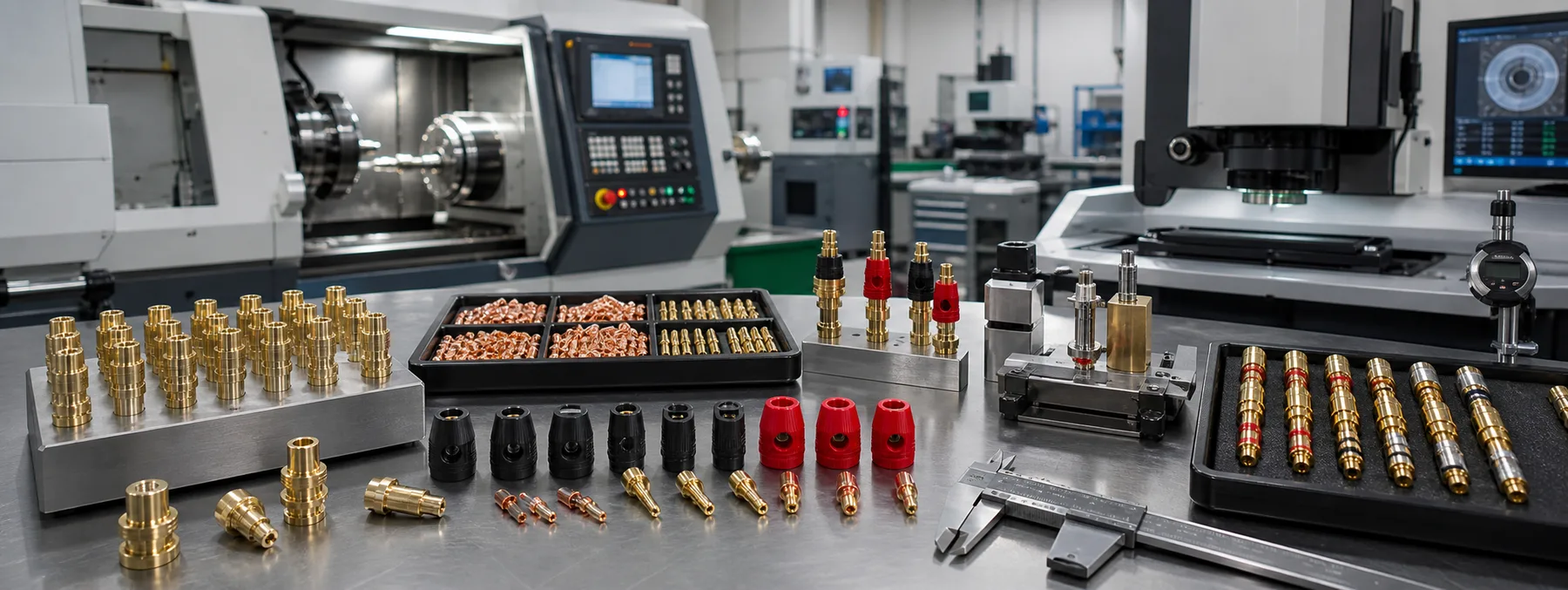
Capability Evidence Images
The capabilities hub visually connects machines, material route, inspection, assembly, and RFQ release evidence.
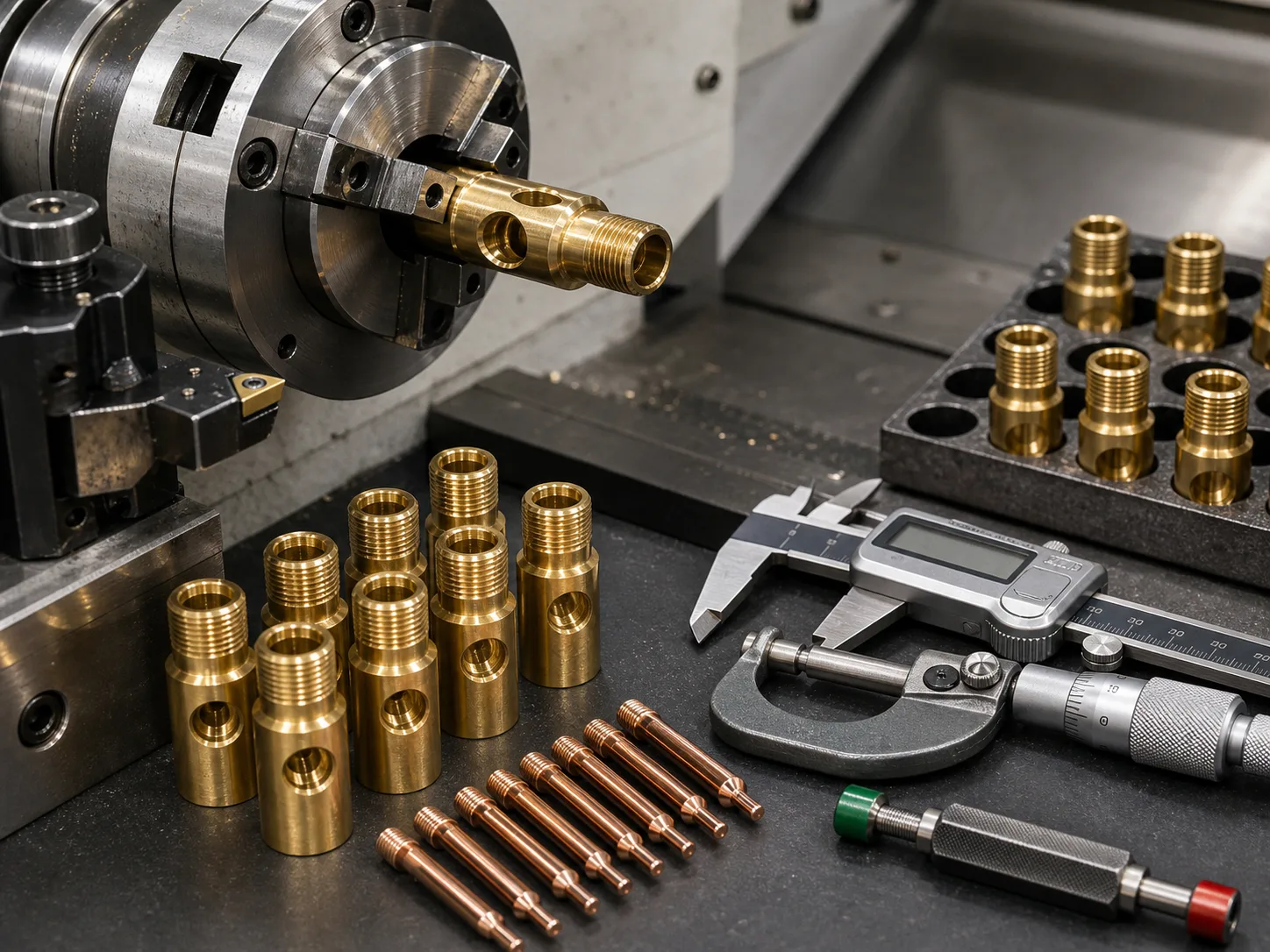
Shows CNC turning, threaded terminal bodies, in-process parts, and dimensional checks.
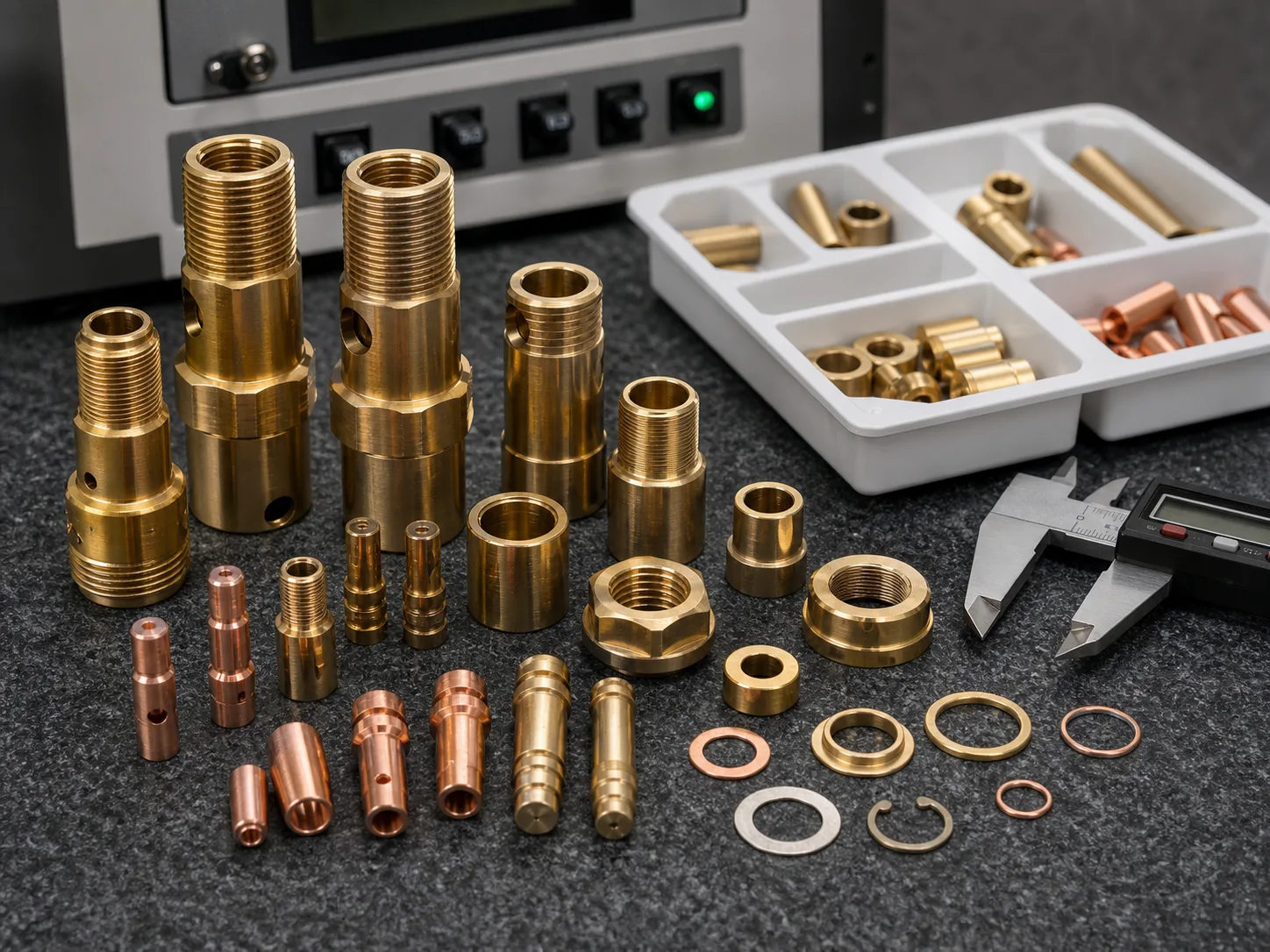
Shows brass bodies, collars, sleeves, copper inserts, washers, and sample inspection context.
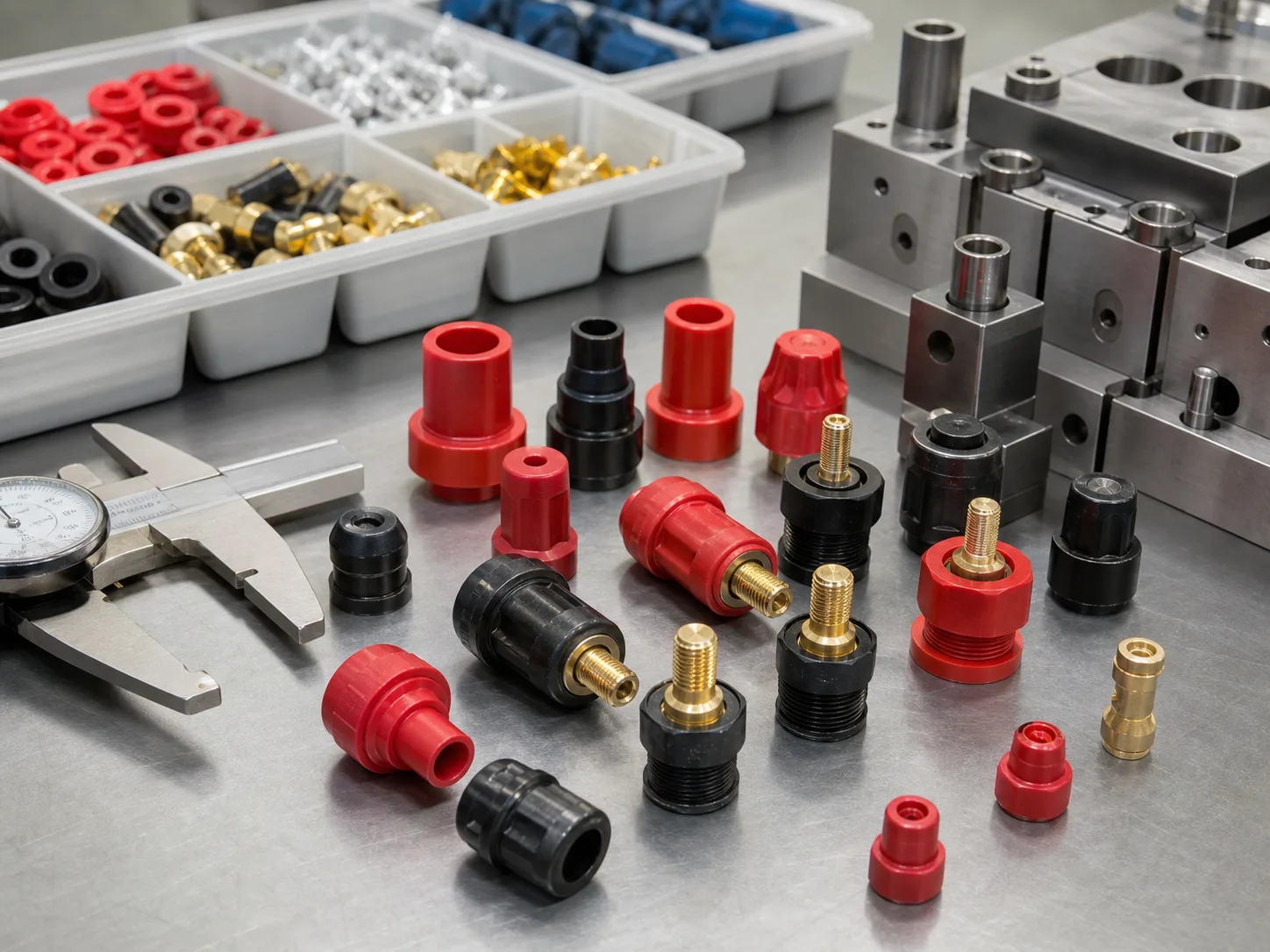
Shows red and black insulation pieces, terminal fit, mold tooling, and dimensional checks.
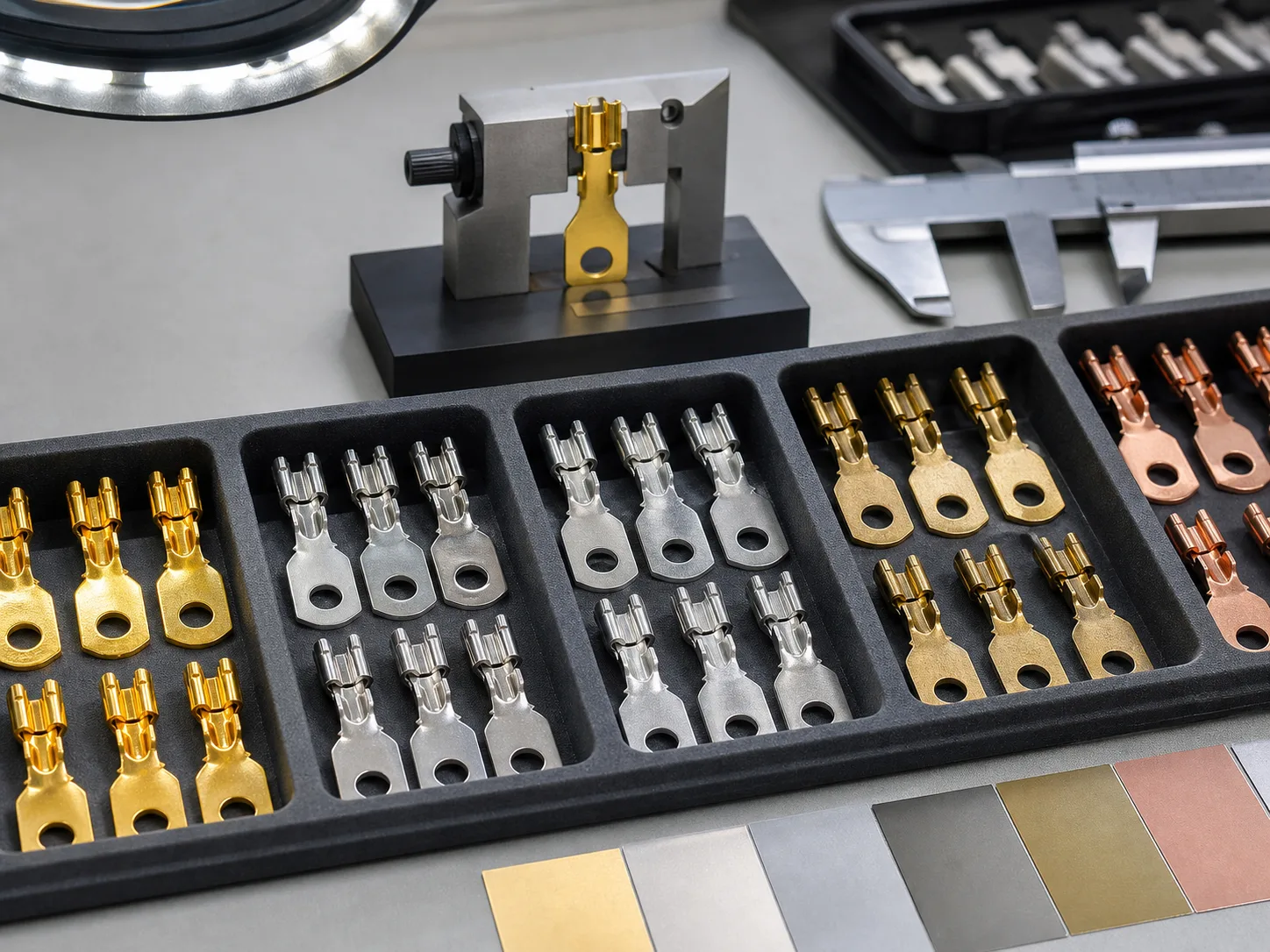
Shows plated terminal samples, contact zones, finish comparison, and inspection fixtures.
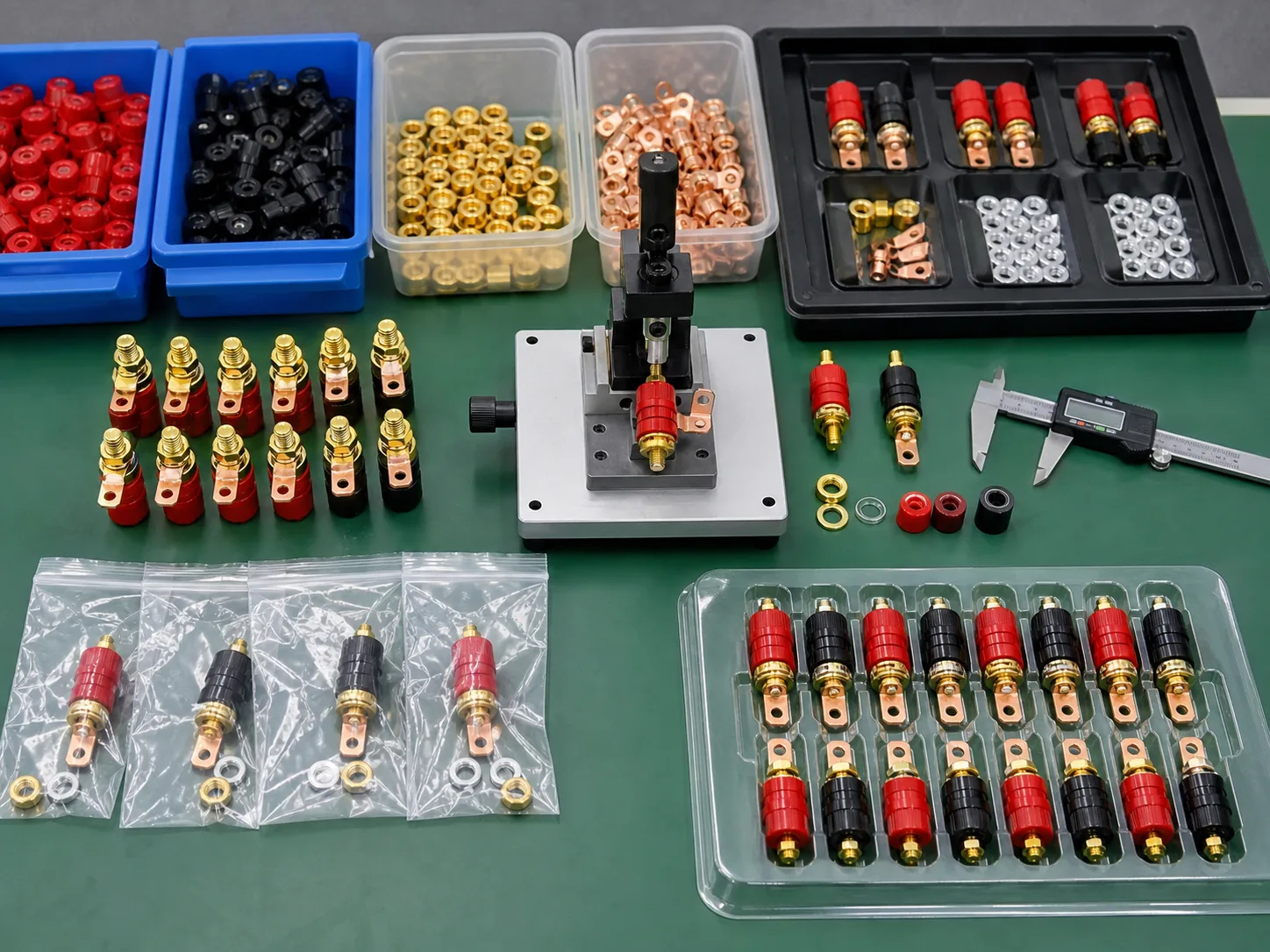
Shows assembly fixtures, hardware grouping, batch packaging, and repeat-production review.
Capability Pages
Each page answers a different engineering question, from machining geometry to insulation, plating, assembly, and inspection planning.
CNC turning, automatic lathe, threaded features, and drawing-based machining for terminal bodies and connector hardware.
Brass terminal bodies, nuts, collars, connector hardware, and finish-ready components reviewed from drawings or samples.
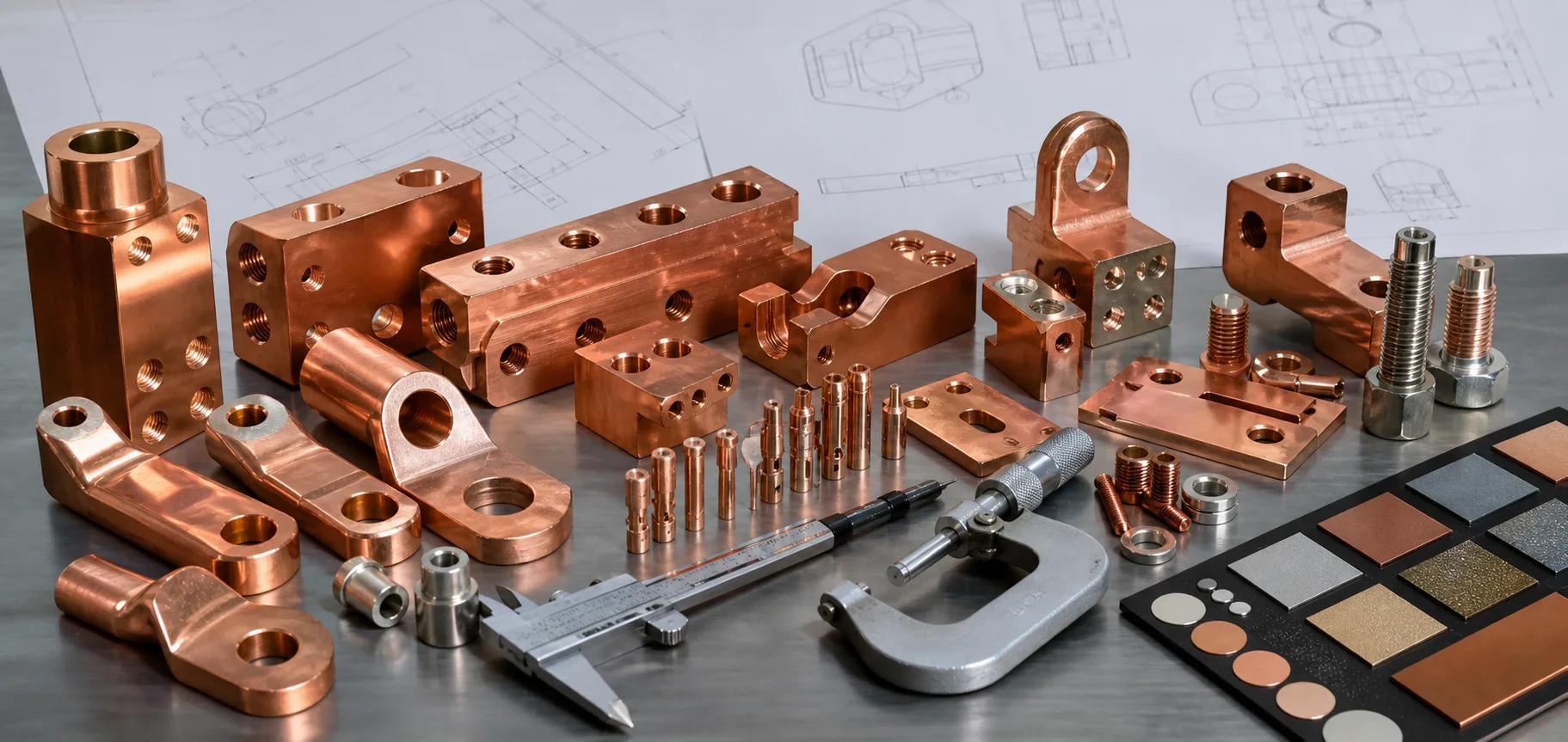
Conductive copper terminal parts, contact bodies, and high-current components reviewed around application requirements.
Nylon and plastic insulation parts, color-coded pieces, caps, housings, and terminal assembly support.
Terminal assembly, private label, logo, packaging, color coding, and inspection scope for repeat production.
Finish review for contact function, appearance zones, protected areas, and brass or copper component requirements.
Project Review
A useful quote starts with the terminal interface, then connects the drawing to machining, finish, insulation, assembly, and inspection controls.
Drawing, sample, mating interface, material, finish, quantity, and application are reviewed before quoting.
Machining, insulation, plating, assembly, inspection, and packaging routes are selected around the approved requirement.
Production should be controlled by approved drawings, samples, or agreed acceptance criteria.
Evidence Library
Capabilities are useful only when they reduce procurement risk. Use this evidence map to decide what information to include with a manufacturing RFQ.
Drawing basis, tolerance needs, mating interface, critical dimensions, contact zones, and validation assumptions.
Machining route, molded insulation, plating route, assembly sequence, inspection points, and packaging controls.
MOQ, lead time, repeat demand, sample approval path, private label scope, and shipment or packaging requirements.
Approved sample, revision record, acceptance criteria, RFQ notes, and production-release reference.
RFQ Trust
Avoid unsupported catalog claims. Exact values should be confirmed after drawing, sample, and project review.
Capability Evidence Library
Capabilities become credible when buyers can connect each process with media, inspection records, material proof, and release controls.
CNC turning, copper or brass machining, insulation parts, plating preparation, assembly, and packing photos or short videos.
Thread gauges, dimensional checks, appearance zones, fit checks, first-article notes, and project-specific QC sheets.
Material grade confirmation, plating requirement, visible and contact zones, sample approval reference, and finish acceptance criteria.
Approved sample records, revision history, packaging instruction, label scope, export packing, and repeat-order control notes.
Evidence Media
Buyers should see how product claims connect to the workshop, inspection table, RFQ file, and repeat-order controls.
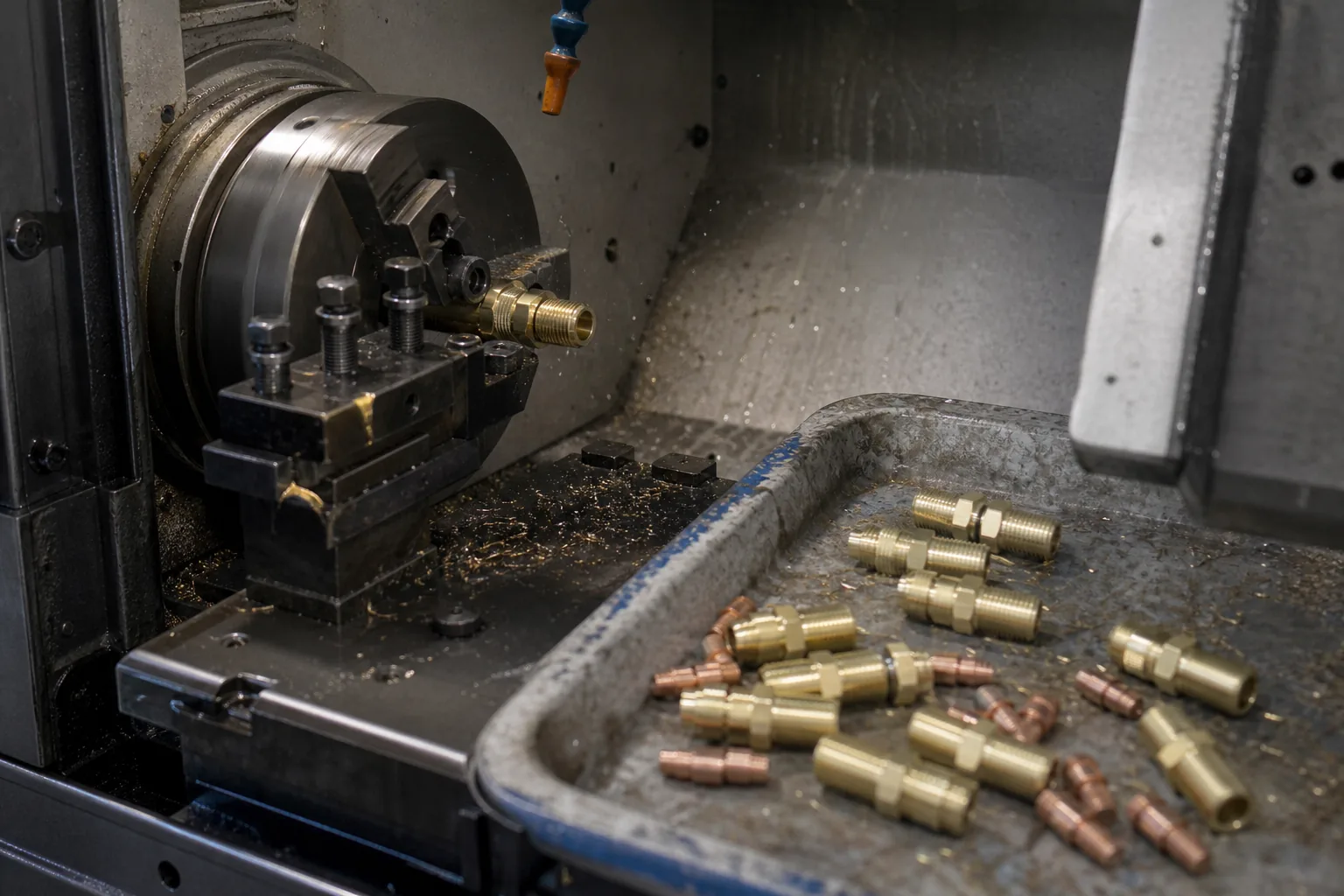
CNC route, gauge checks, in-process inspection, and acceptance records.
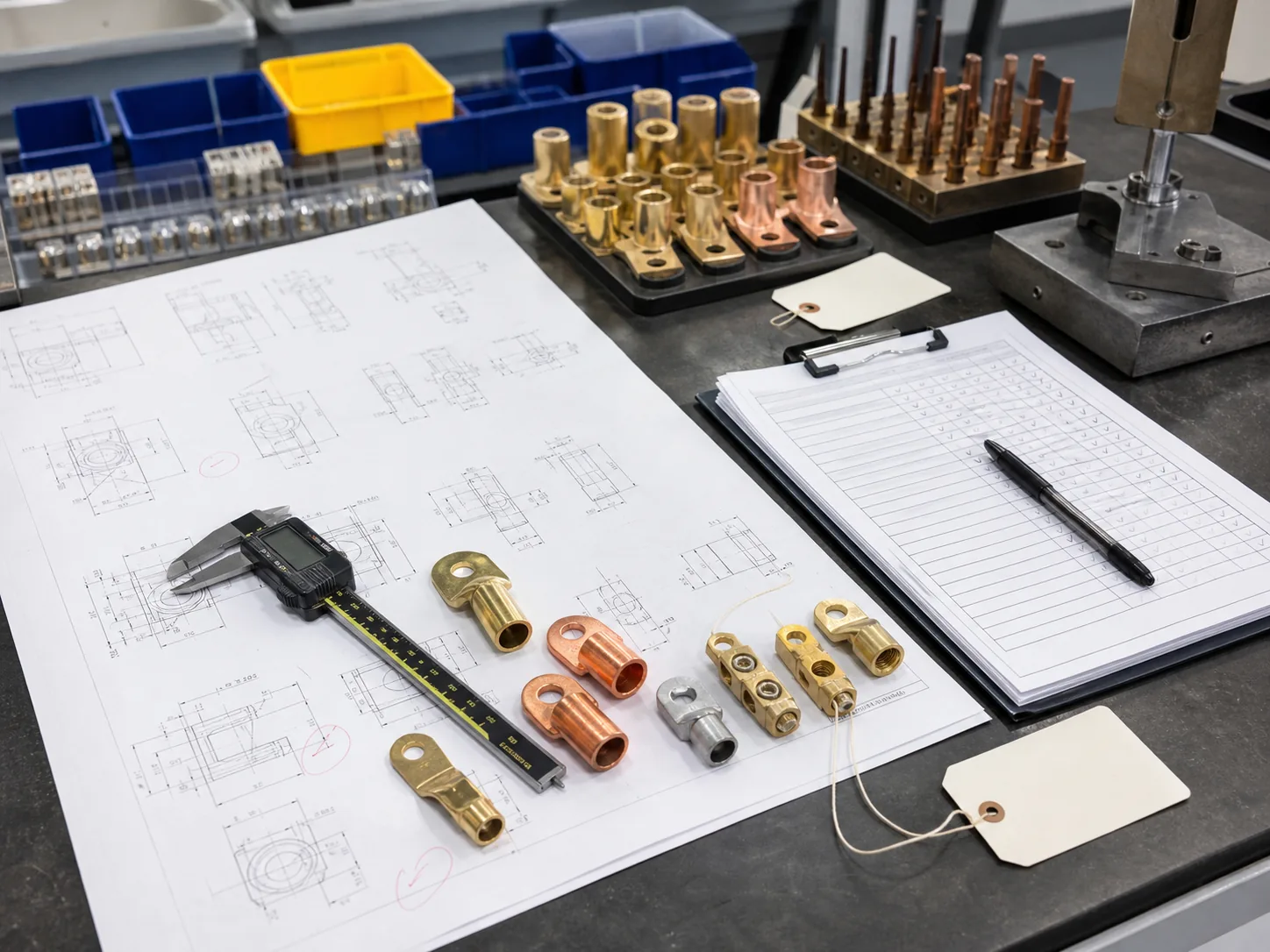
Drawing basis, sample comparison, marked dimensions, and approval notes.
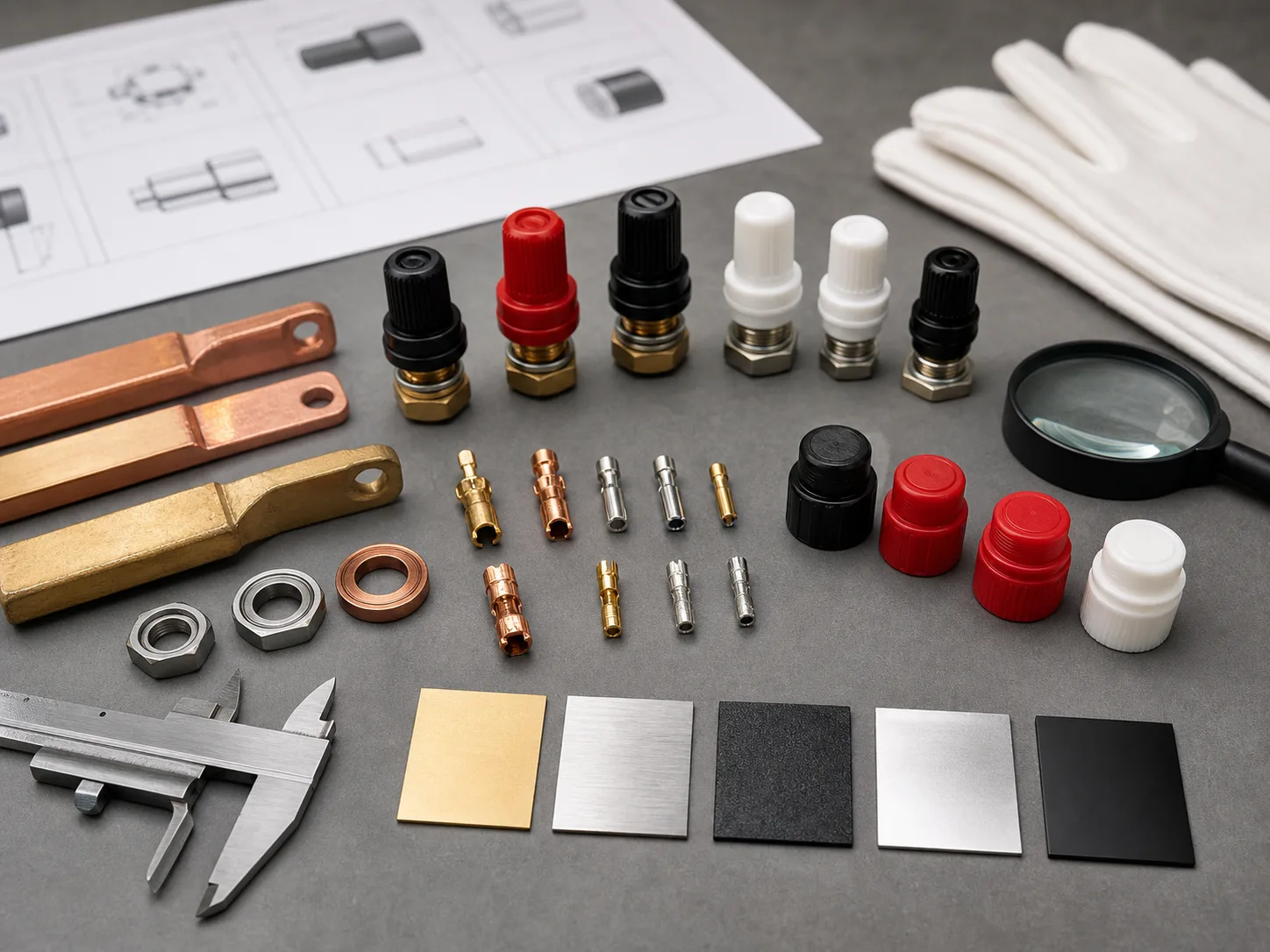
Material route, plating scope, contact zones, color parts, and finish examples.
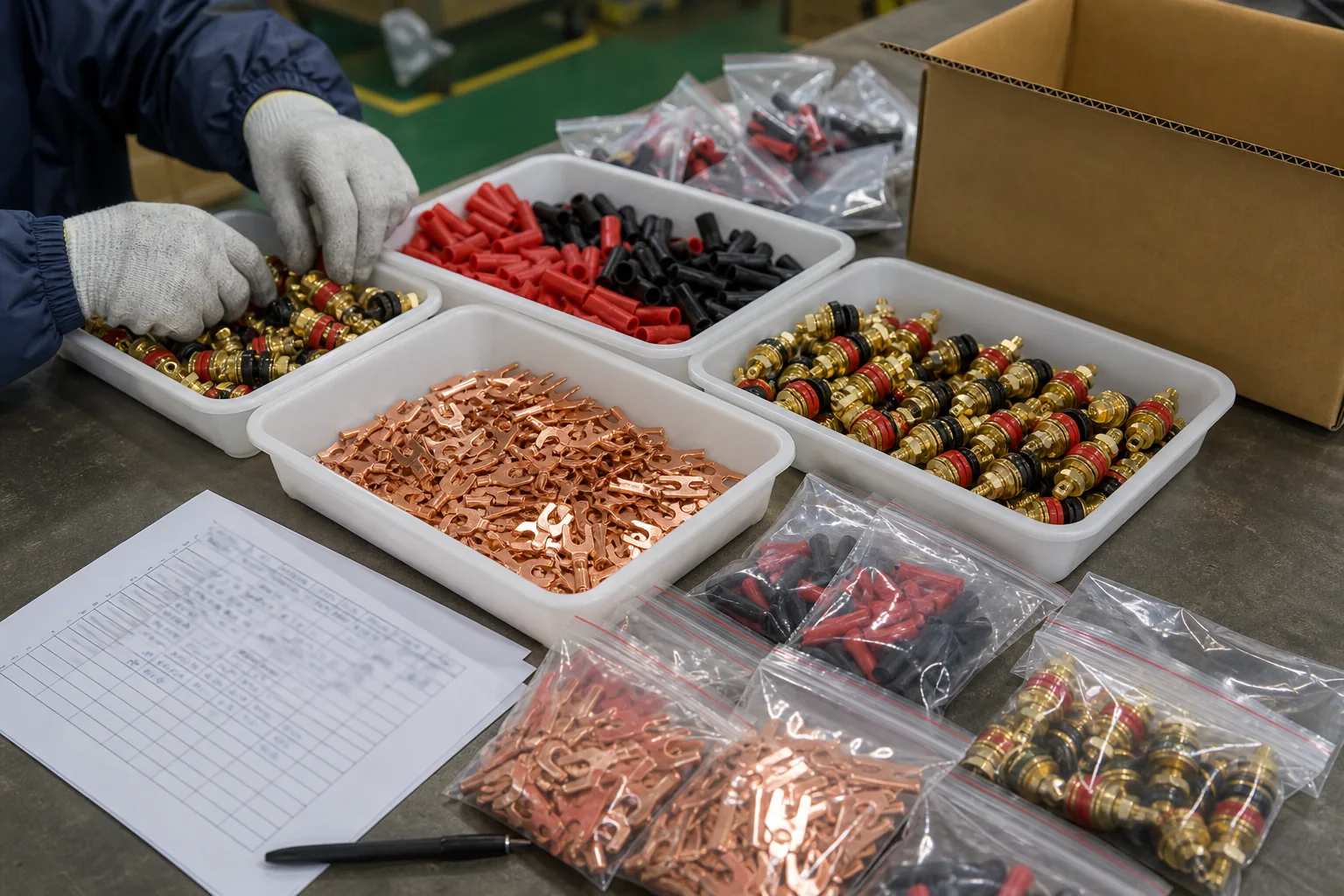
RFQ package, QC sheet, packing requirement, project release, and revision control.
Drawing and Specification Package
RFQ quality improves when engineering, purchasing, and quality teams agree on the same drawing, inspection, and approval basis before samples move into production.
Drawing, STEP/IGES model, sample photo, mating part, panel layout, or dimensioned sketch used as the review basis.
Metal grade, insulation material, plating route, visible zones, contact zones, color requirements, and compliance notes.
Critical dimensions, thread fit, contact surface, insulation fit, assembly sequence, appearance standard, and packaging check.
Sample approval, revision reference, change-control note, packaging instruction, and repeat-order acceptance criteria.
Send the part drawing, material, finish, quantity, and application so Axiterm can review the route and quote path.
Request a QuoteKnowledge Base
Use these resources to prepare cleaner RFQs, compare manufacturing routes, and reduce review back-and-forth before sampling.
Supplier review checklist for drawings, materials, plating, samples, inspection, capacity, and quotations.
Read resource ->Interface guide covering banana plugs, spade lugs, bare wire, pin connectors, and OEM review points.
Read resource ->Practical answers for engineering and purchasing teams before sending a drawing-based RFQ.
Read resource ->